
The Grim Genius of Charles Addams
Meet the Grandfather of the Addams Family: Charles Addams
While today best known for its live-action television and film adaptations, the Addams Family franchise began as a series of comics by New Yorker cartoonist Charles “Chas” Addams. Born January 7, 1912, Addams grew up in Westfield, New Jersey, a suburb 16 miles from Manhattan. Despite what his cartoons may suggest, Addams was not from a bustling multigenerational household; rather, he was the only child in a quiet, average family. Though, perhaps it was this normalcy that led him to seek out the macabre. As a child, Addams developed a taste for the peculiar, frequently drawing disturbing images and sneaking into graveyards and abandoned Victorian mansions (Sauer, 2019).
In adulthood, Addams honed his dark humor as a cartoonist for The New Yorker, publishing 1,300 illustrations throughout his career (Sauer, 2019). Across his lifetime, he displayed a unique talent for depicting the absurd and distilling an entire story into a single panel. Upon Addams’s death in 1988, Roger Angell wrote for The New Yorker:
“Accidents, apprehensions, impossibilities, fatalities, and worse haunt his scenes in heartwarming fashion, and one must almost list some of the favorite Addams themes and things before an answer to the paradox suggests itself. Laboratories, space creatures, dark descending stairs, crypts and tunnels, Halloween, desert islands, fortune-tellers, gigantic insects, funerals, headsmen with axes, witch doctors, large serpents, gallows and gibbets, witches and caldrons, beds of nails—these are the sketches or dreamy imaginings of a ten-year-old boy in arithmetic class, and, for all their dire shadows and drippings, they are without cynicism or malice, or true darkness. They are childlike, and the pleasures they evoke bring back the flooding imagination, the perfect memory, and the innocent, skulking anarchy of our first free selves. Those of us who began leafing through this magazine as children quickly fastened upon the Addams drawings, because we understood them and got the joke right away, and then, when we came to know and look for the Addams family, in their slidingpanel, dishevelled Victorian mansion, we may not have understood at first that we were simply visiting a surreal, turnabout American family, but we did notice that this was the only haunted household that included children and pets” (Angell, 1988).
Fellow New Yorker artist Robert “Bob” Mankoff spoke with Patrick Healy of The New York Times described Addams’s revolutionary style in promotion for The Addams Family on Broadway in 2010:
“Addams was one of the first to realize how much incongruity could be tolerated in a cartoon—how far apart the frames of reference…could be and still work as a joke. In this he reveals a fondness for a type of Dadaist mashup humor that is now commonplace in cartooning and on the Internet. But Addams’s most familiar comic trope is to take the familiar and invert it by having ordinary people calmly and nonchalantly harbor or act on aggressive, even homicidal, impulses” (Mankoff, 2010).
Mankoff also credits Addams for the creation of the horror comedy genre and the introduction of campy horror villains throughout the mid-to-late 20th century, writing:
“[Charles Addams] tapped into that vein of American gothic that has a touch of paranoia about it, seeing behind every comforting façade the uncomfortable truth about the duality of human nature. But where Gothic literature usually combined these themes with romance, Addams made the horror hilarious: disturbing, but at the same time friendly, identifiable, and acceptable…Horror films that combine humor with horror, such as ‘A Nightmare on Elm Street,’ with its wise-cracking Freddy Krueger, are also in his debt. And, of course, Addams’s humor was ‘black’ and ‘sick’ before those terms applied. But I think his influence extends beyond the horror genre, to humor not as a comforting ‘laughter is the best medicine’ anodyne but as something deeply skeptical of the purported values of middle-class American life. By making us laugh at, and with, his fiendish protagonists, he makes us temporarily share their values, and doubt our own” (Mankoff, 2010).
The Artwork of Charles Addams
As you explore Addams’s work, consider the following:
What stands out about Charles Addams’s artistic style?
What stands out about Charles Addams’s comedic style?
How did Charles Addams’s work evolve over time?
How did the popularity of the Addams Family franchise affect Addams’s non-Addams Family art?
How did Charles Addams affect the horror and comedy genres? Where do you see his influence?
Charles Addams’s New Yorker Cartoons
![Addams, C. (1936, Aug. 15). “Medusa at the Salon” [Illustration]. The New Yorker , p. 23. https://archives.newyorker.com/newyorker/1936-08-15/flipbook/022/ .](https://images.squarespace-cdn.com/content/v1/6515c98fe1bbd91be575282e/d911ab1f-0159-42d4-a1e4-c11daf1671c3/%E2%80%9CMedusa+at+the+Salon%2C%E2%80%9D+The+New+Yorker%2C+p.+23.jpg)
![Addams, C. (1937, Oct. 30). “She Shows Up Every Halloween” [Illustration]. The New Yorker , p. 25. https://archives.newyorker.com/newyorker/1937-10-30/flipbook/024/ .](https://images.squarespace-cdn.com/content/v1/6515c98fe1bbd91be575282e/f1733ec9-6c9e-4517-a541-e824cedfd75d/%E2%80%9CShe+Shows+Up+Every+Halloween%2C%E2%80%9D+The+New+Yorker%2C+Oct.+30%2C+1937.jpg)
![Addams, C. (1940, Jan. 13). “Downhill Skier” [Illustration]. The New Yorker , p. 13. https://archives.newyorker.com/newyorker/1940-01-13/flipbook/012/ .](https://images.squarespace-cdn.com/content/v1/6515c98fe1bbd91be575282e/d56969f8-cdc1-4a85-884c-3cb60b9a4b3f/%E2%80%9CDownhill+Skier%2C%E2%80%9D+The+New+Yorker%2C+Jan.+13%2C+1940.jpg)
![Addams, C. (1942, Apr. 25). “It’s not locked, honey” [Illustration]. The New Yorker , p. 13. https://archives.newyorker.com/newyorker/1942-04-25/flipbook/012/ .](https://images.squarespace-cdn.com/content/v1/6515c98fe1bbd91be575282e/79509f98-65c4-43e4-871b-f2f9a4eaab1e/%E2%80%9CIt%E2%80%99s+not+locked%2C+honey%2C%E2%80%9D+The+New+Yorker%2C+Apr.+25%2C+1942.jpg)
![Addams, C. (1947, Feb. 8). “Movie Scream” [Illustration]. The New Yorker , p. 27. https://archives.newyorker.com/newyorker/1947-02-08/flipbook/026/ .](https://images.squarespace-cdn.com/content/v1/6515c98fe1bbd91be575282e/b1b3ff4c-69bf-4e8e-a14c-e7e568d5674a/%E2%80%9CMovie+Scream%2C%E2%80%9D+The+New+Yorker%2C+Feb.+8%2C+1947.jpg)
![Addams, C. (1947, Dec. 20). “Careful! Children at play!” [Illustration]. The New Yorker, p. 32. https://archives.newyorker.com/newyorker/1947-12-20/flipbook/032/ . ](https://images.squarespace-cdn.com/content/v1/6515c98fe1bbd91be575282e/10026608-5963-40d9-bf09-0379e9a891ff/Careful%21_+Children+at+Play%2C_+The+New+Yorker%2C+Dec.+20%2C+1947.jpg)
![Addams, C. (1965, Aug. 14). “Well, I'm ready if you are” [Illustration]. The New Yorker, p. 23. https://archives.newyorker.com/newyorker/1965-08-14/flipbook/022/ .](https://images.squarespace-cdn.com/content/v1/6515c98fe1bbd91be575282e/7d982149-5547-43b7-90dd-932bdfc7443f/%E2%80%9CWell%2C+I%27m+ready+if+you+are%2C%E2%80%9D+The+New+Yorker%2C+Aug.+14%2C+1965.jpg)
![Addams, C. (1973, Oct. 29). “Nevermore” [Illustration]. The New Yorker , p. 33. https://archives.newyorker.com/newyorker/1973-10-29/flipbook/032/ .](https://images.squarespace-cdn.com/content/v1/6515c98fe1bbd91be575282e/238c9dc1-3d4a-4d57-8f5f-e6e3917f9c21/%E2%80%9CNevermore%2C%E2%80%9D+The+New+Yorker%2C+Oct.+29%2C+1973.jpg)
![Addams, C. (1993, Feb. 22). “Unseen Addams: The Last Cartoon” [Illustration]. The New Yorker , p. 127. https://archives.newyorker.com/newyorker/1993-02-22/flipbook/126/ .](https://images.squarespace-cdn.com/content/v1/6515c98fe1bbd91be575282e/20d625d8-cb80-4a44-895a-29a046dc97f3/%E2%80%9CUnseen+Addams_+The+Last+Cartoon%2C%E2%80%9D+The+New+Yorker%2C+Feb.+22%2C+1993.jpg)
![Addams, C. (2002, Feb. 18). “Goldilocks” [Illustration]. The New Yorker , p. 152. https://archives.newyorker.com/newyorker/2002-02-18/flipbook/152/ .](https://images.squarespace-cdn.com/content/v1/6515c98fe1bbd91be575282e/4cc4ba78-d9de-416d-a8ff-4394d0bebe82/Goldilocks%2C_+The+New+Yorker%2C+Feb.+18%2C+2009.jpg)
Charles Addams’s New Yorker Covers
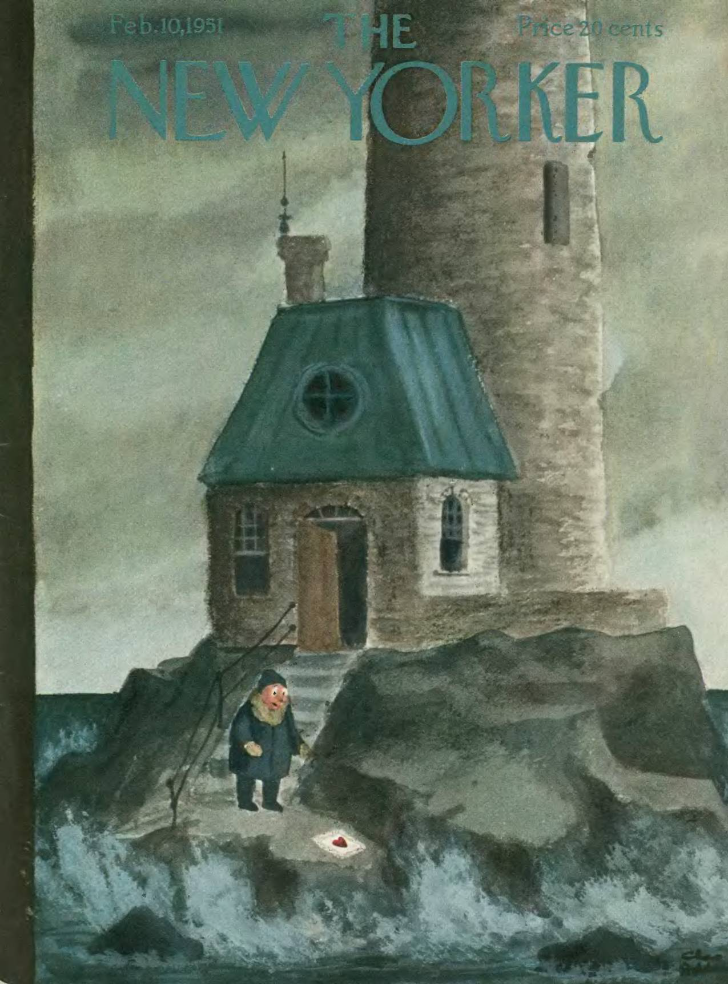
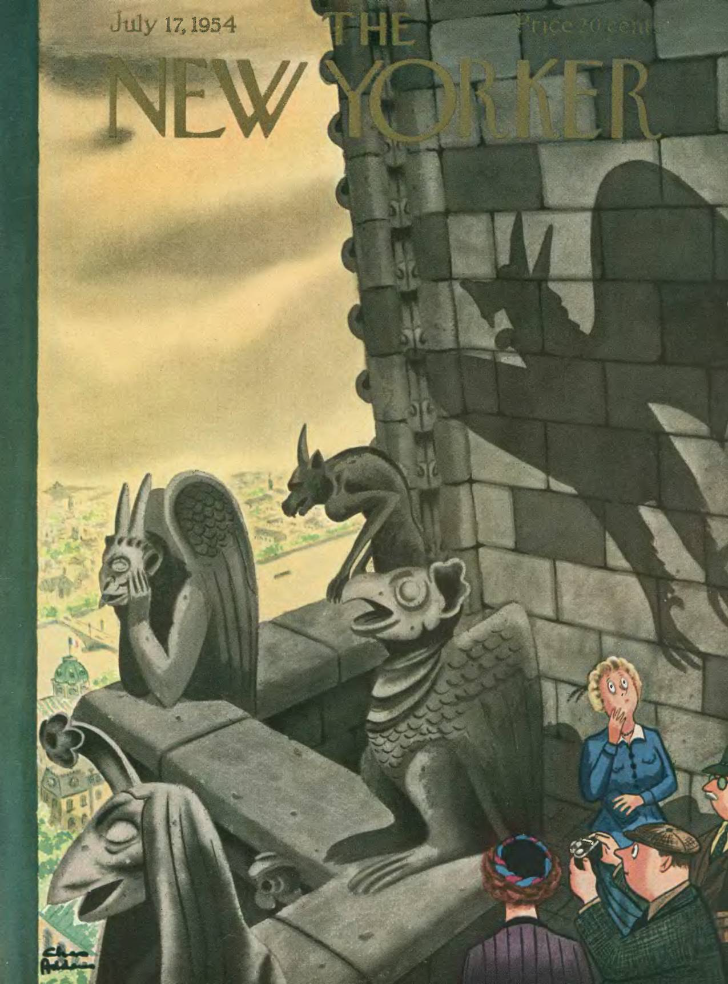
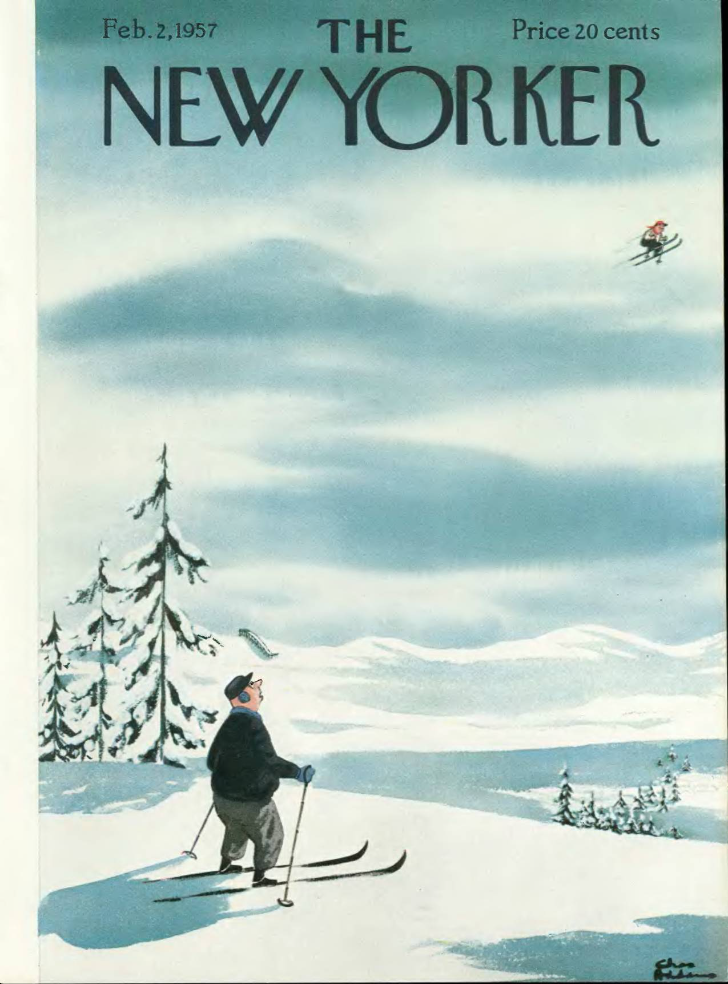
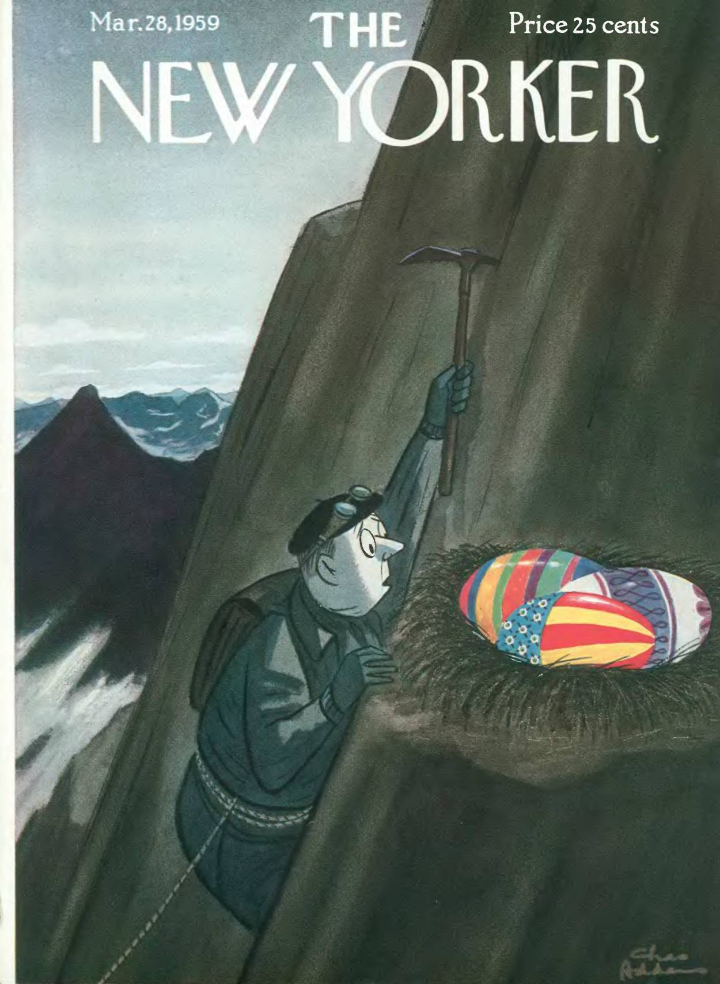
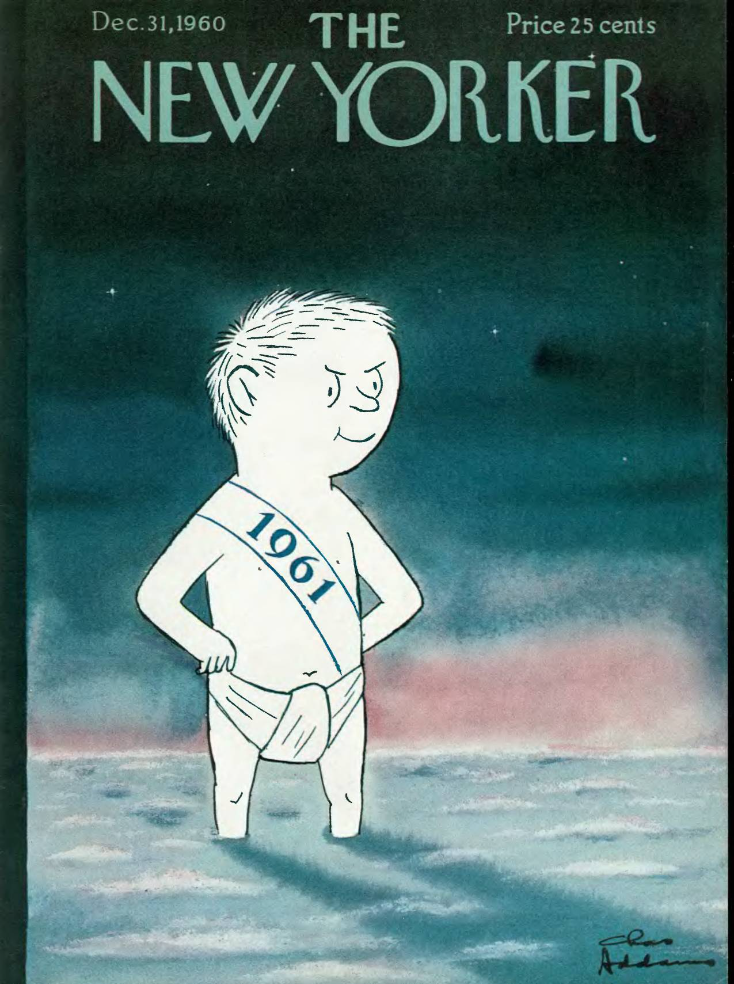
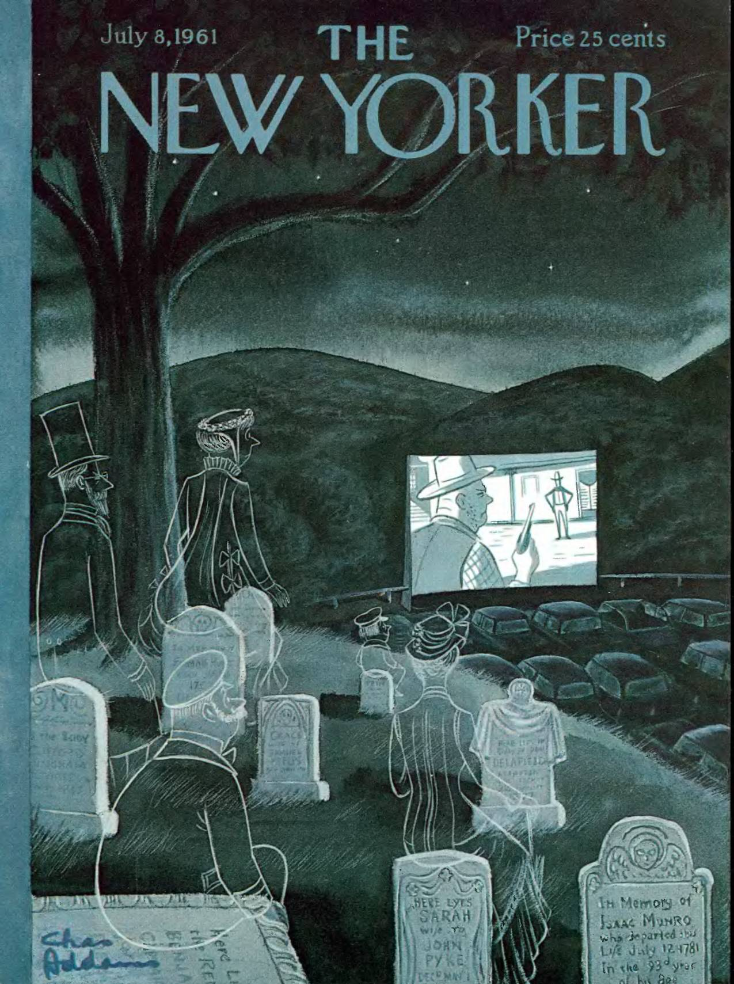
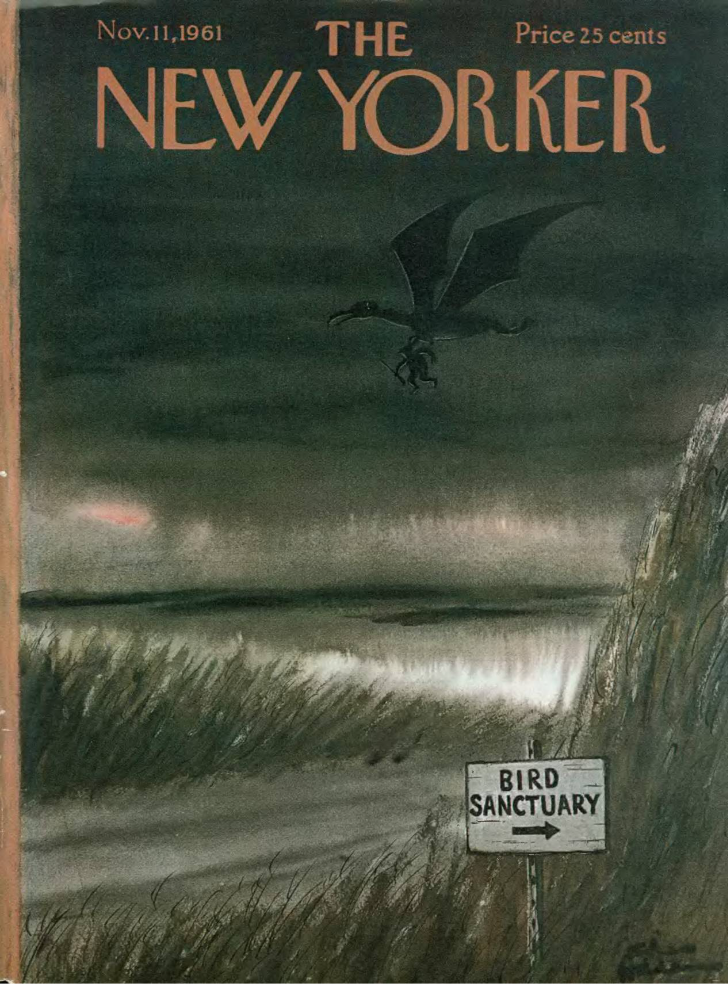
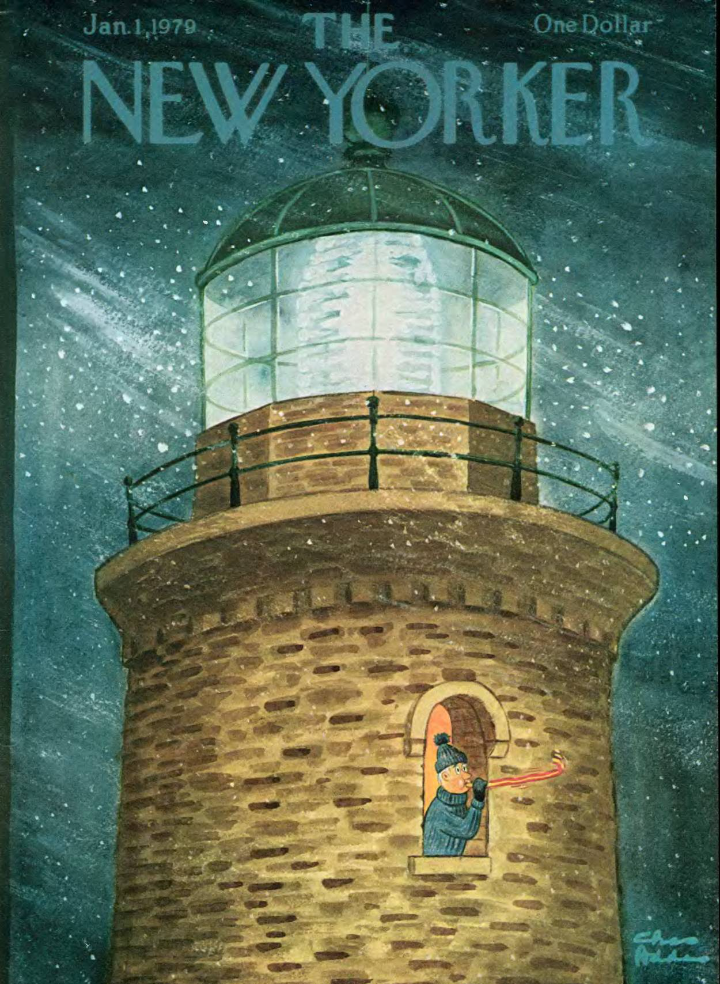
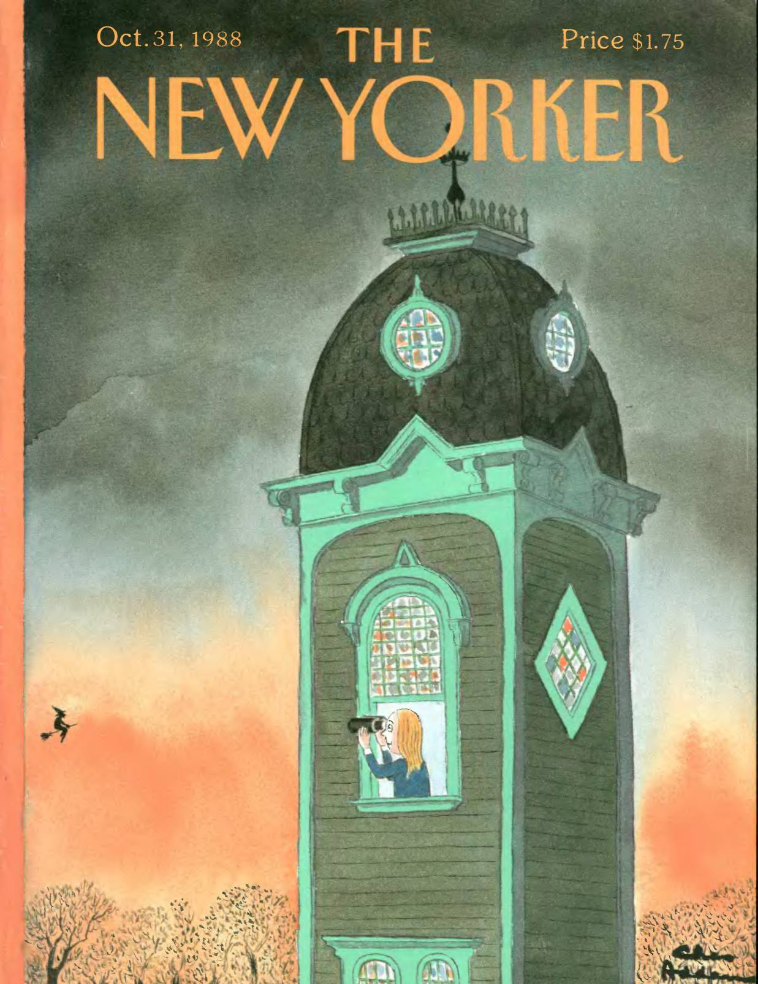
-
Angell, R. (1988, Oct. 10). “Charles Addams.” The New Yorker. https://www.newyorker.com/magazine/1988/10/17/1988-10-17-122-tny-cards-000351319#:~:text=Charles%20Addams%20published%20his%20first,clarity%2C%20originality%2C%20artistic%20assurance%2C.
Franzen, J. (2004, Nov. 22). “The Comfort Zone.” The New Yorker. https://www.newyorker.com/magazine/2004/11/29/the-comfort-zone.
KalaLea. (2019, Oct. 25). “Charles Addams’s American Family.” New Yorker Radio Hour. New York Public Radio.https://www.wnycstudios.org/podcasts/tnyradiohour/segments/charles-addams-american-family.
Mankoff, R. (2010, Mar. 11). “Charles Addams.” The New Yorker. https://www.newyorker.com/cartoons/bob-mankoff/charles-addams.
McCabe, A, (2022, Oct. 27). “How the cartoonist behind The Addams Family defused fear, with dead-on humor.” NPR. https://www.npr.org/2022/10/27/1129540641/charles-addams-cartoonist-new-yorker.
Miserocchi, H.K. (2010). The Addams Family, An Evilution. Pomegranate Communications.
Sauer, P. (2019, Oct. 11). “The Cultural History of ‘The Addams Family.’” Smithsonian Magazine. https://www.smithsonianmag.com/arts-culture/cultural-history-addams-family-180973315/.