
Teaching the Elements of Art Using Georges Seurat’s “A Sunday Afternoon on the Island of La Grande Jatte” (1884)
In this lesson, we will:
Define the elements of art that make up an artist’s toolkit.
Define the principles of design and how they govern the elements of art.
Explore how George Seurat used the elements of art and principles of design in his A Sunday Afternoon on the Island of La Grande Jatte (1884).
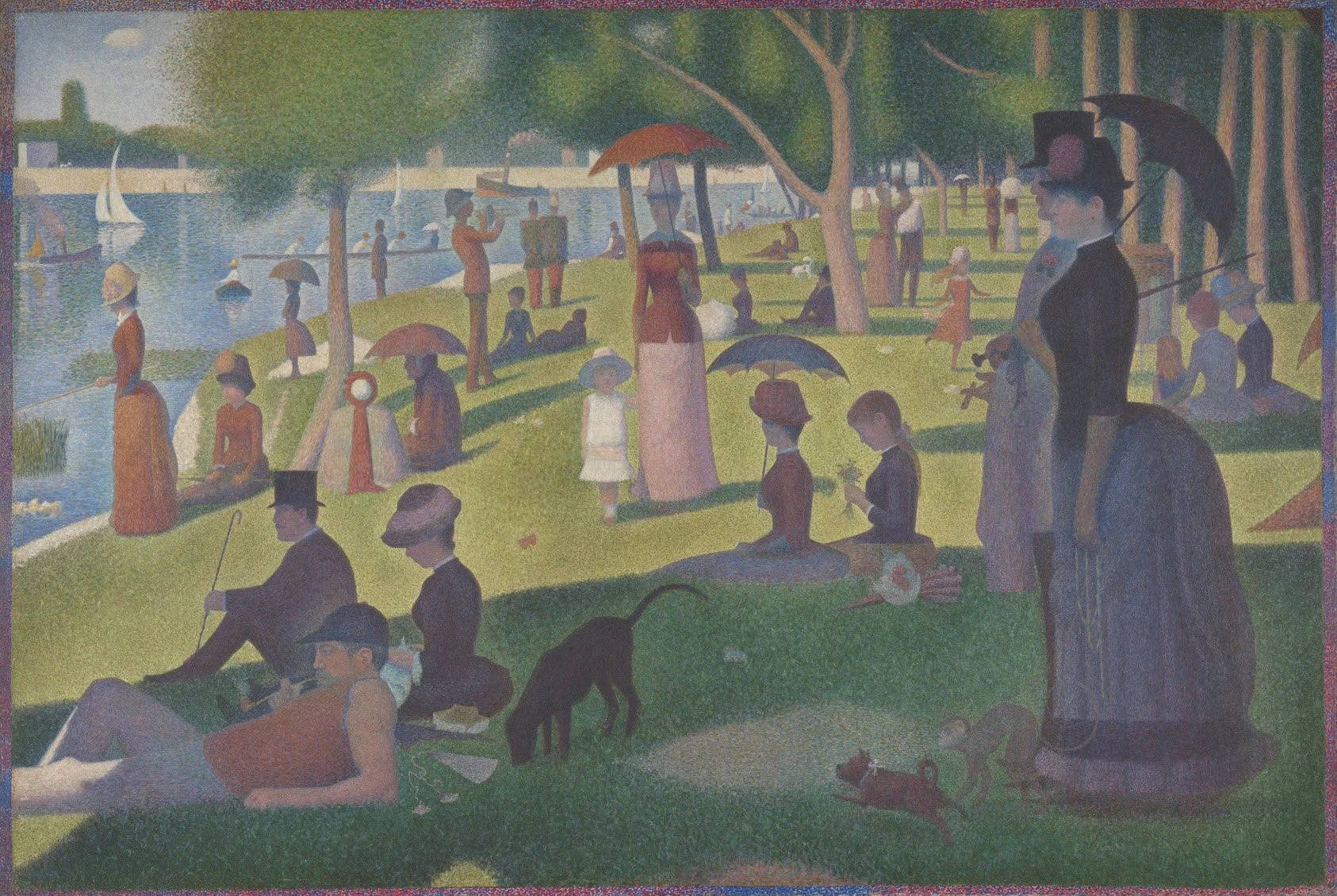
As both a Sondheim and John Hughes movie fan, I have long loved George Seurat’s A Sunday Afternoon on the Island of La Grande Jatte (1884). Painstakingly painted in the Pointillist techinique over the course of two years, Seurat’s A Sunday on La Grande Jatte depicts Parisians of varying social classes at leisure in a park on La Grande Jatte, an island located in the Seine River. Now on display at the Art Institute of Chicago, Seurat’s painting freezes the curious figures of the then-modern French society “in their essential traits… organized by harmonies of color,” much like the tableaus found in ancient Greek and Egyptian art (Art Institute of Chicago).
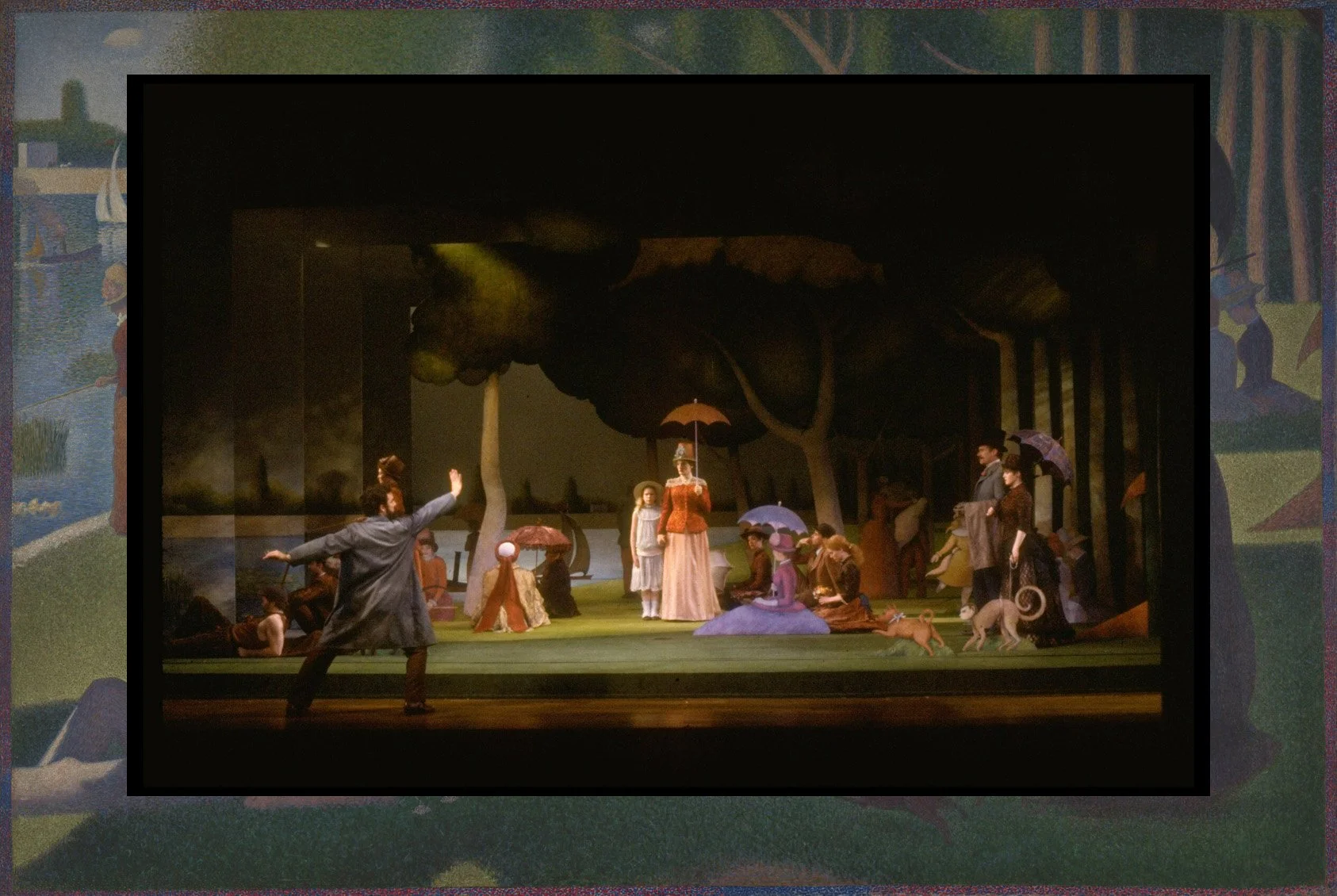
One hundred years later, Stephen Sondheim and James Lapine’s Sunday in the Park with George (1984) re-animated the scene — this time, on Broadway. In the musical, Sondheim and Lapine imagine George Seurat’s world as he composes the famous painting and bring life to each of the subjects he immortalized on canvas. In the act one closer, “Sunday,” George places the finishing touches on his seminal work A Sunday Afternoon on the Island of La Grande Jatte (1884), guiding each of the cast to their exact spots in the painting.
In the lyrics, Stephen Sondheim highlights what makes Seurat’s A Sunday Afternoon on the Island of La Grande Jatte work: “order, design, tension, balance, harmony” (1984). He goes on to describe the stunning details of the painting: “the blue, purple-yellow-red water”; “the cool blue triangular water”; “the soft, green elliptical grass”; “the verticals of trees”; and “the green, orange-violet mass” (Sondheim, 1984). While more beautifully written in his signature prose, Sondheim essentially outlines what visual artists call the elements of art and principles of design. Seurat’s work provides an excellent model to explore these concepts.
What are the Elements of Art?
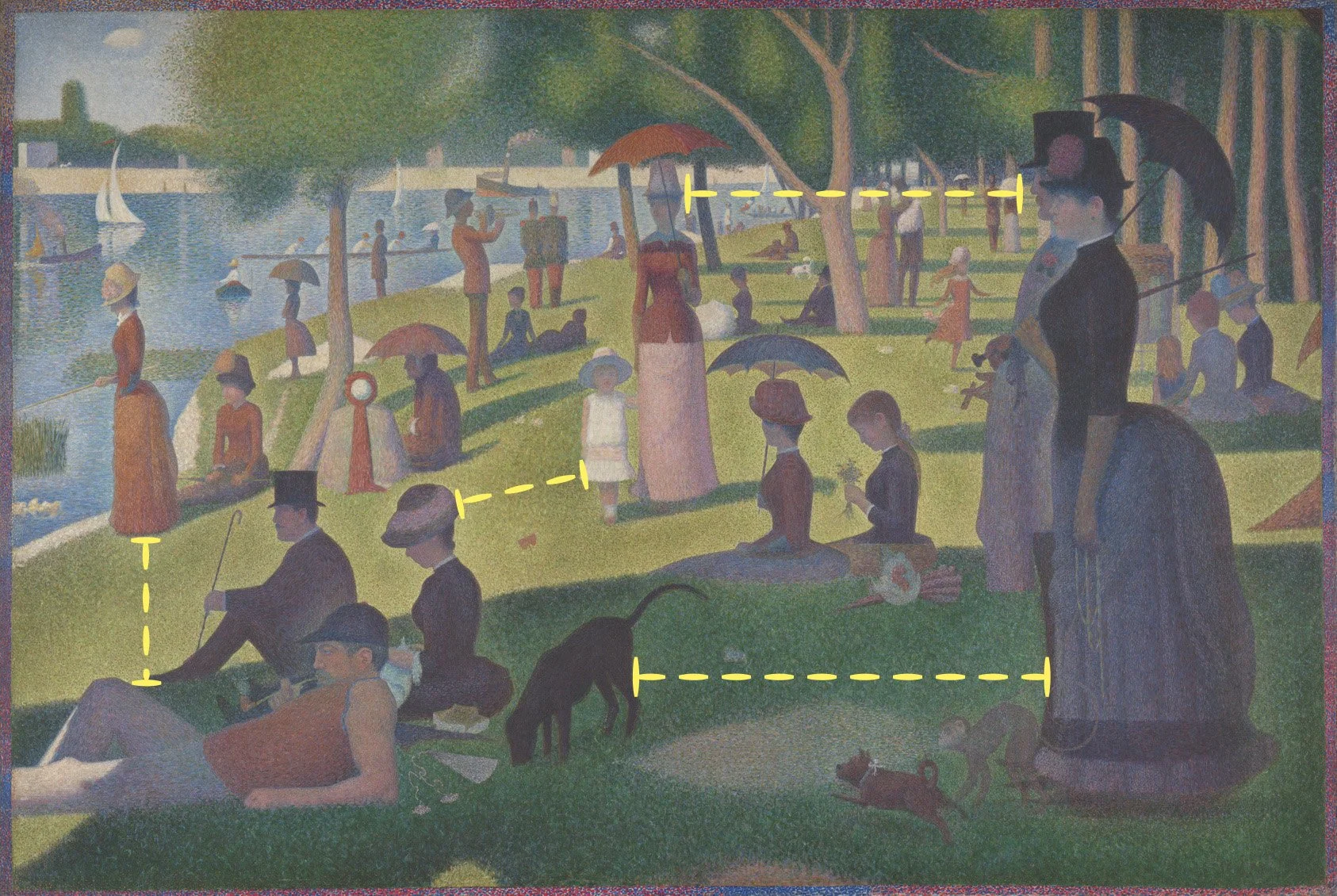
Artists use the 6 elements of art – line, shape, color, texture, space, and perspective – to convey a message visually.
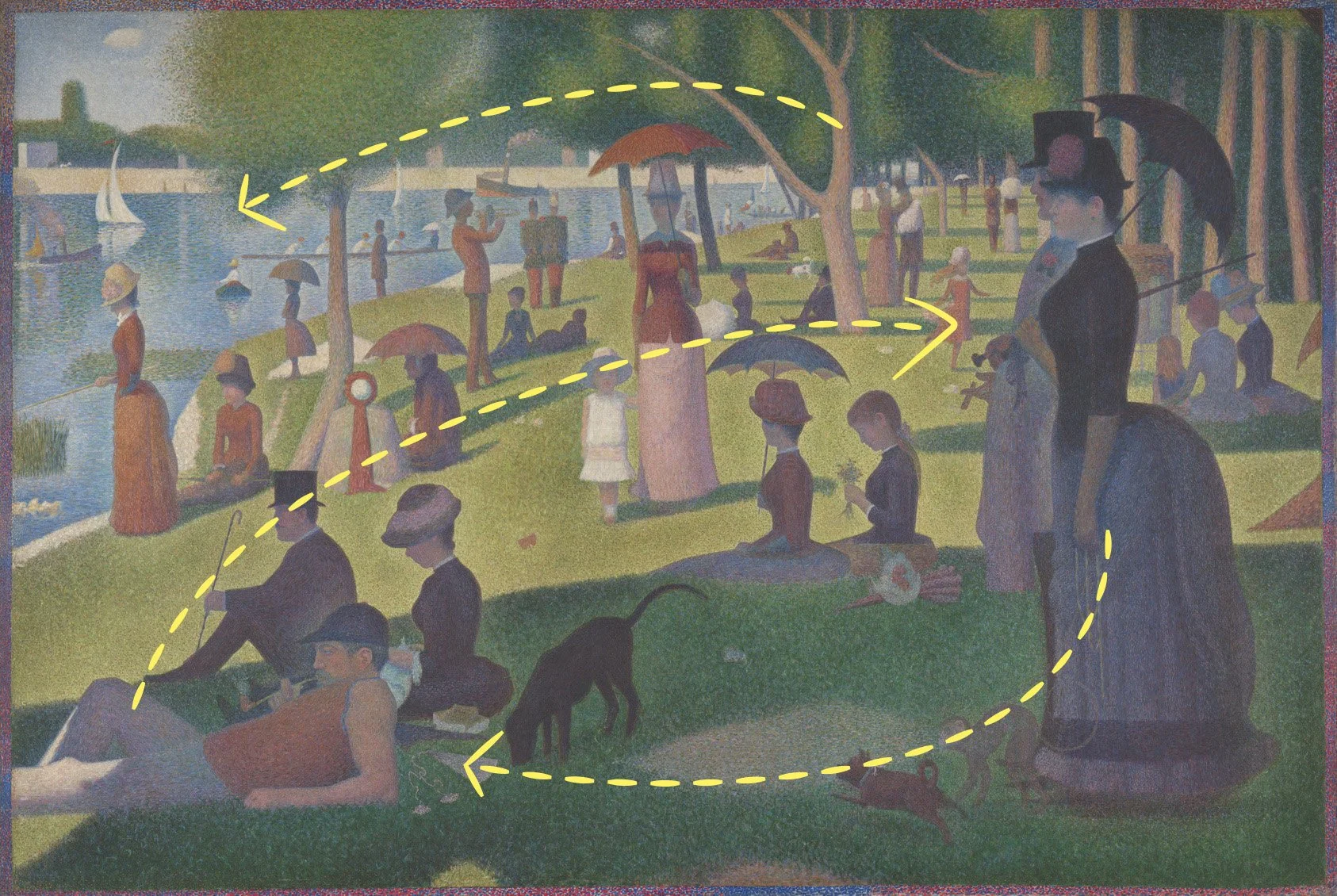
Line: Lines create movement and guide the reader’s eye across the page.
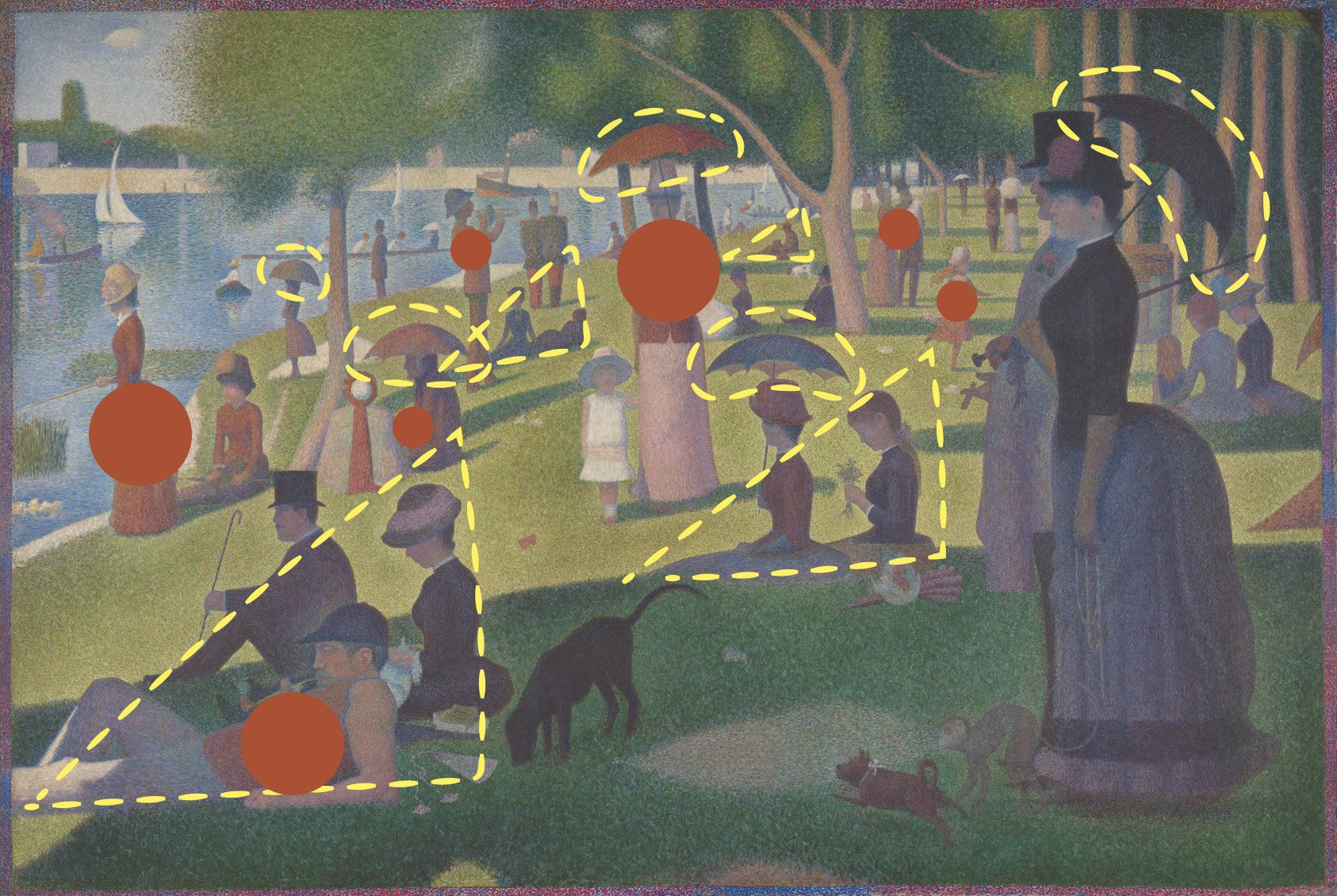
Shape: A shape is a two-dimensional enclosed area. Shapes can be geometric (hard edge) or organic (soft edge).
Color: Color is the perception of light reflected from the surface of a shape or form. Artists use color to convey mood, emotion, and tone.
Texture: Texture is the surface quality of an object that we can sense through touch. Texture can be tactile, like in sculpture, or visual, like in paintings.
Space: Space is the distances and areas around, between, and within components of a design.
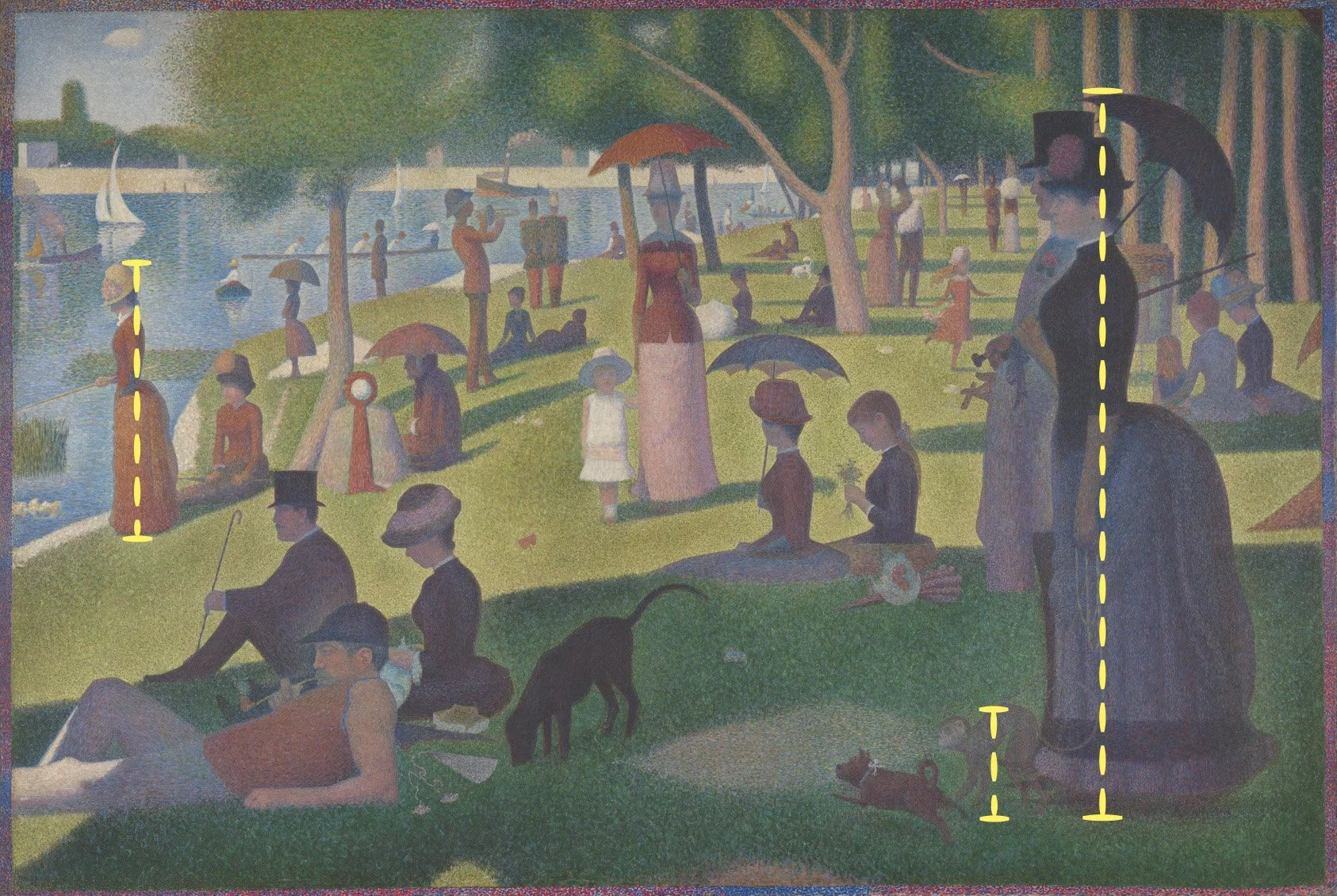
Perspective: Perspective is the point-of-view of the composition, created by the framing and use of scale.
Let’s explore using Seurat.
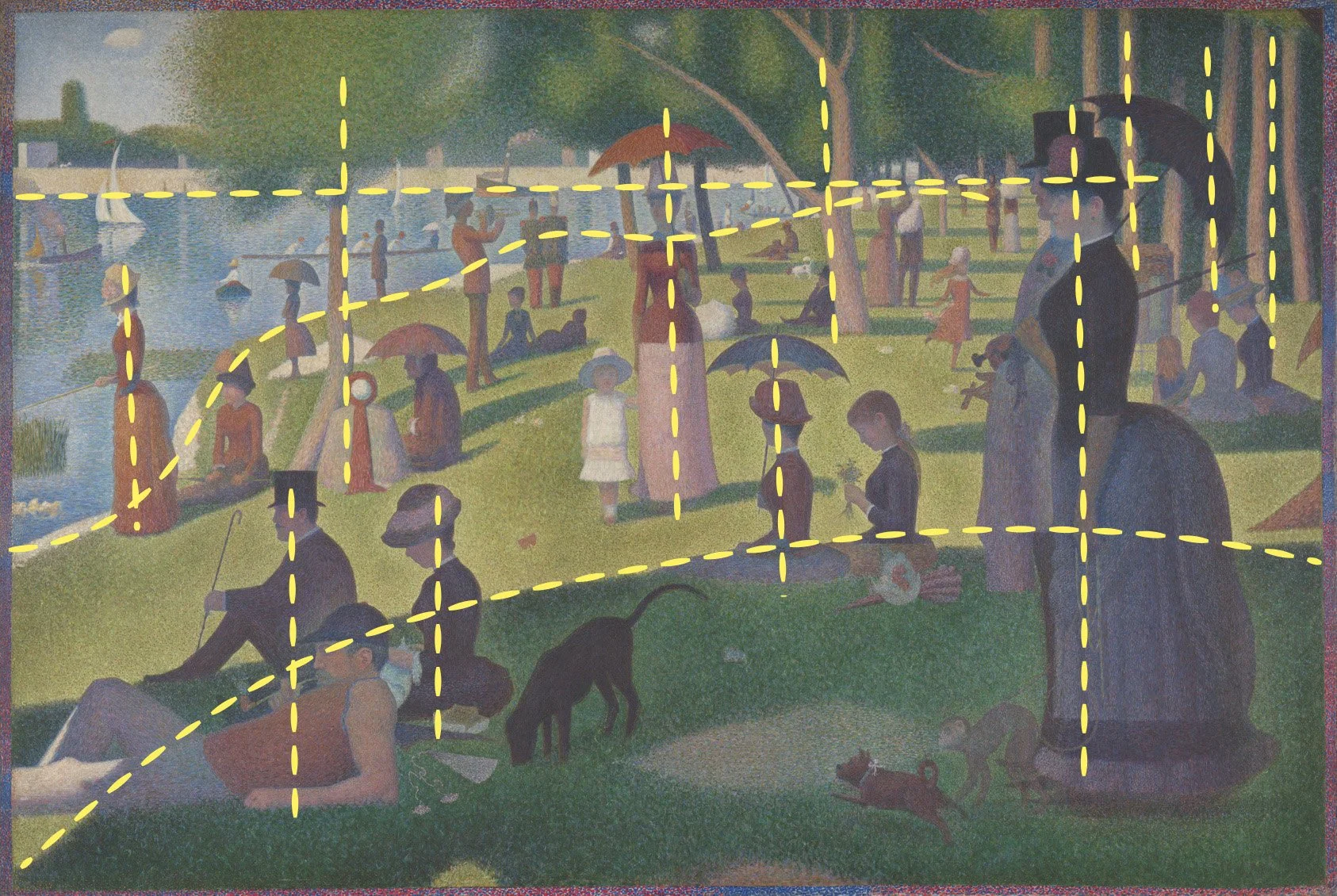
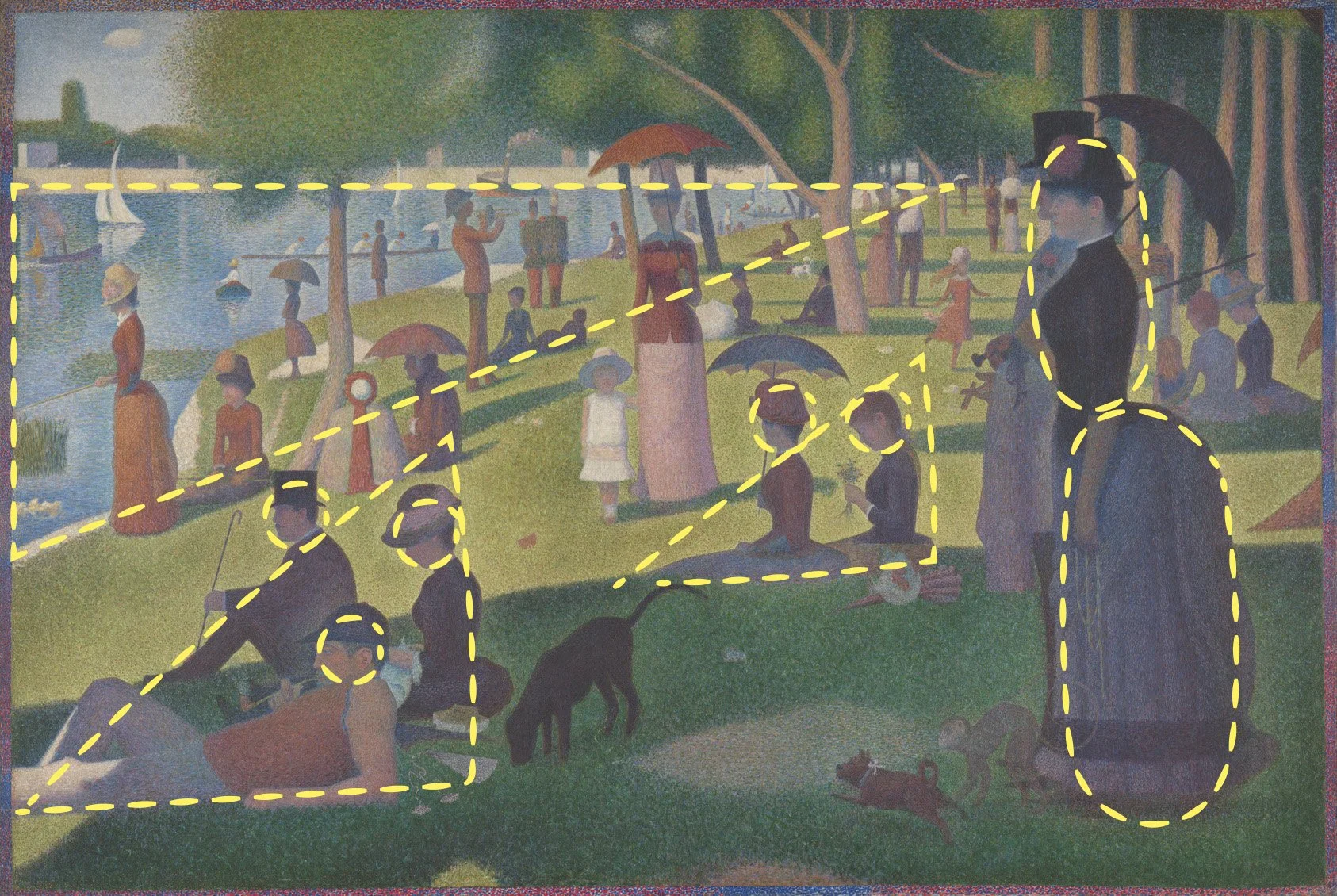
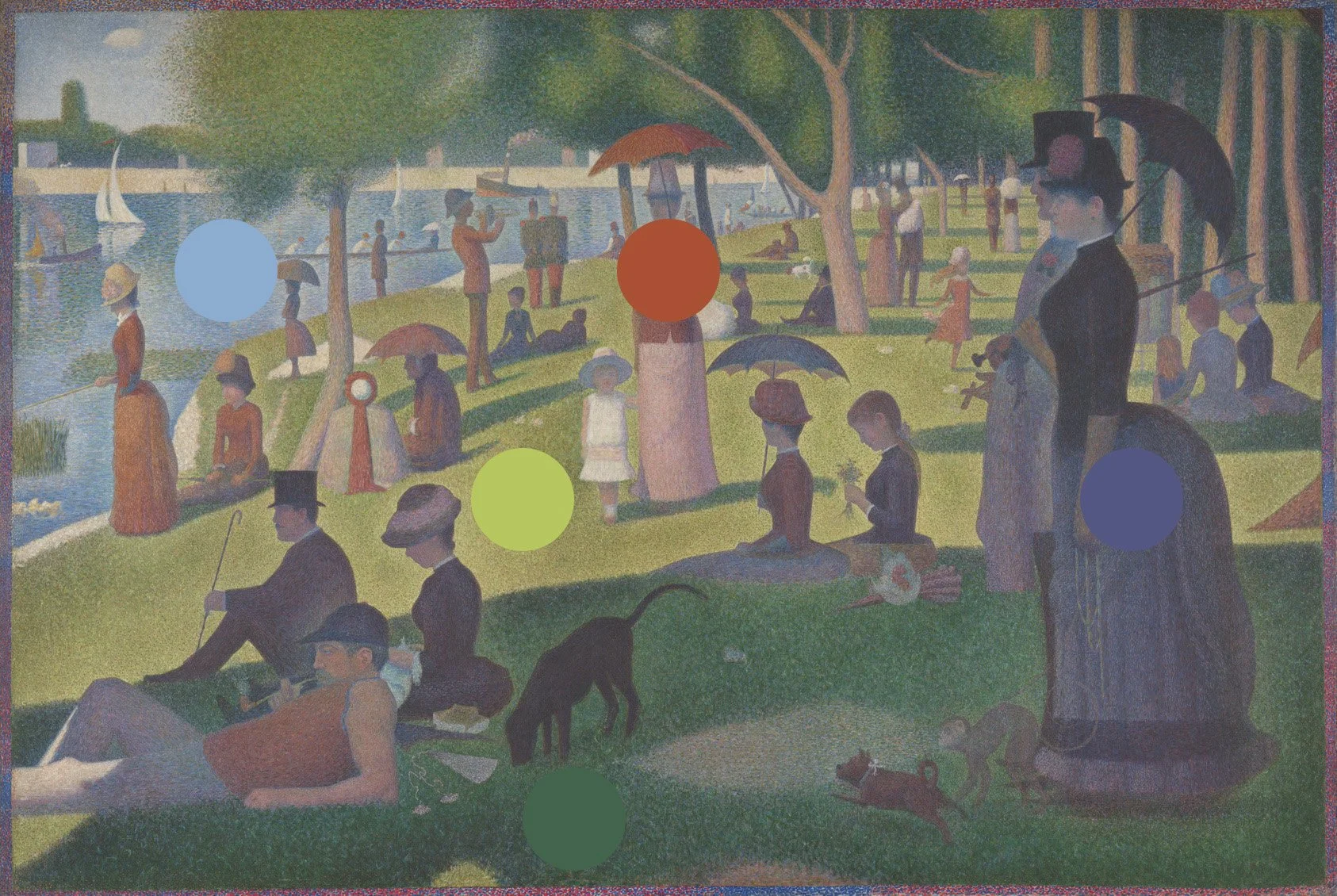
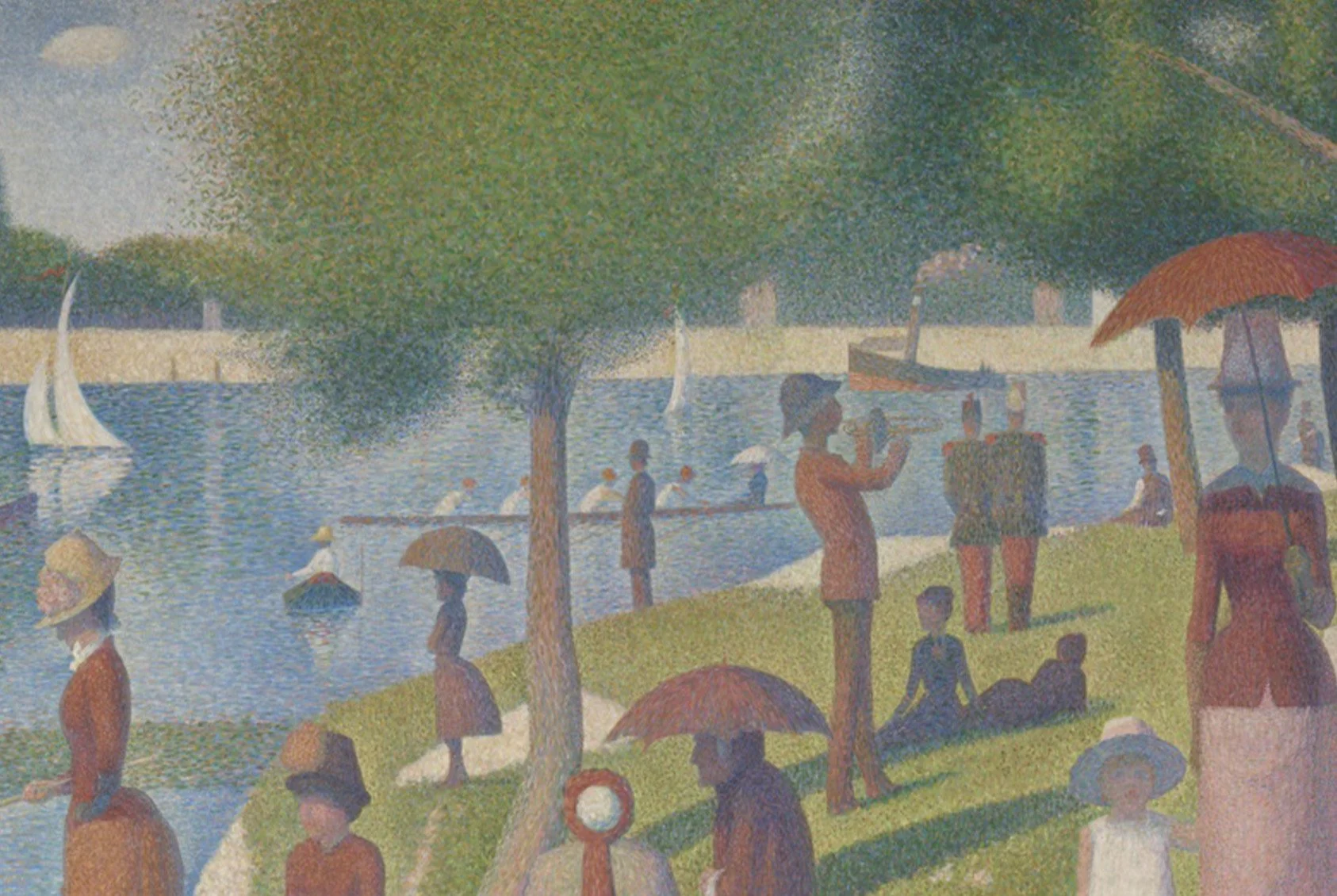
What are the Principles of Design?
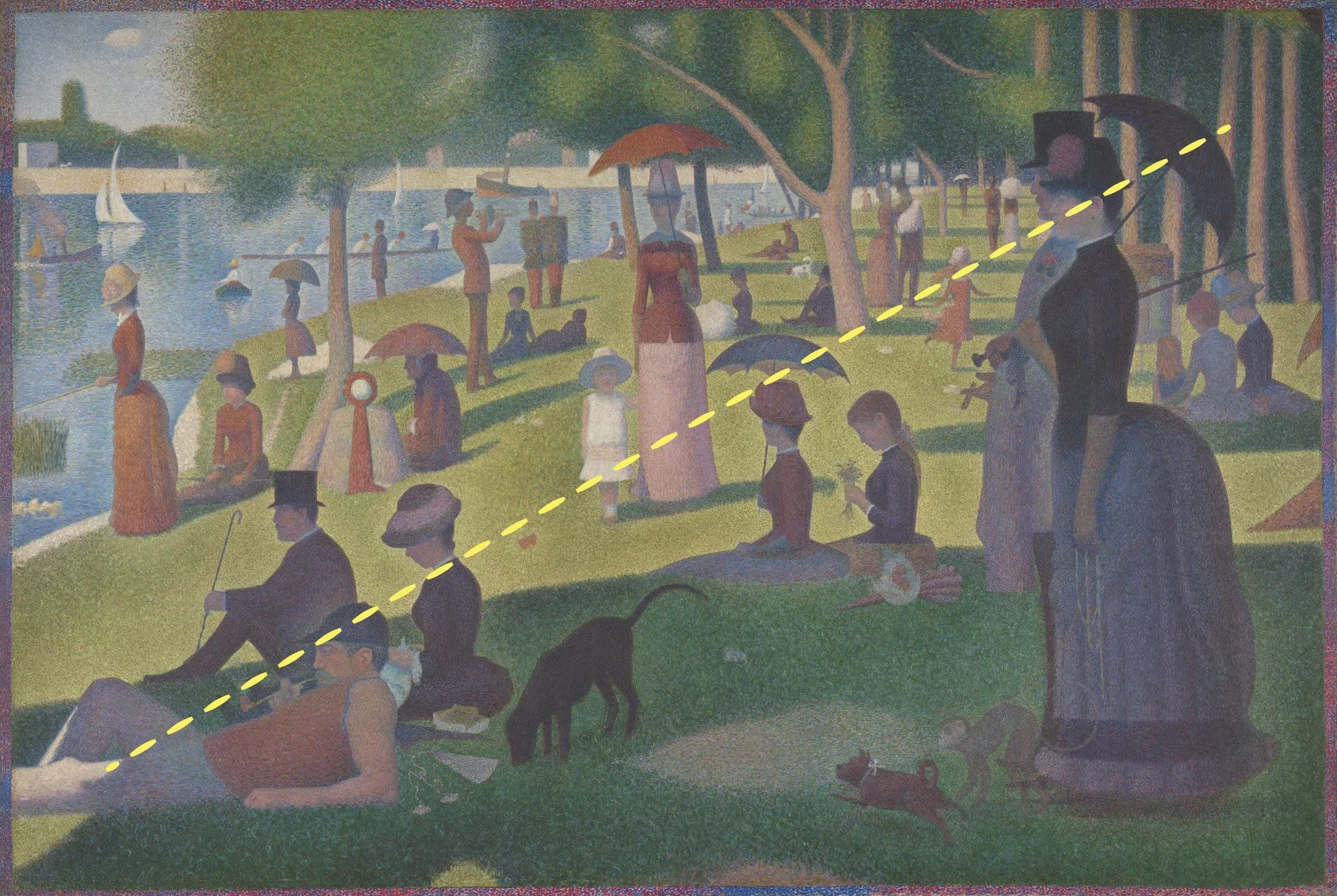
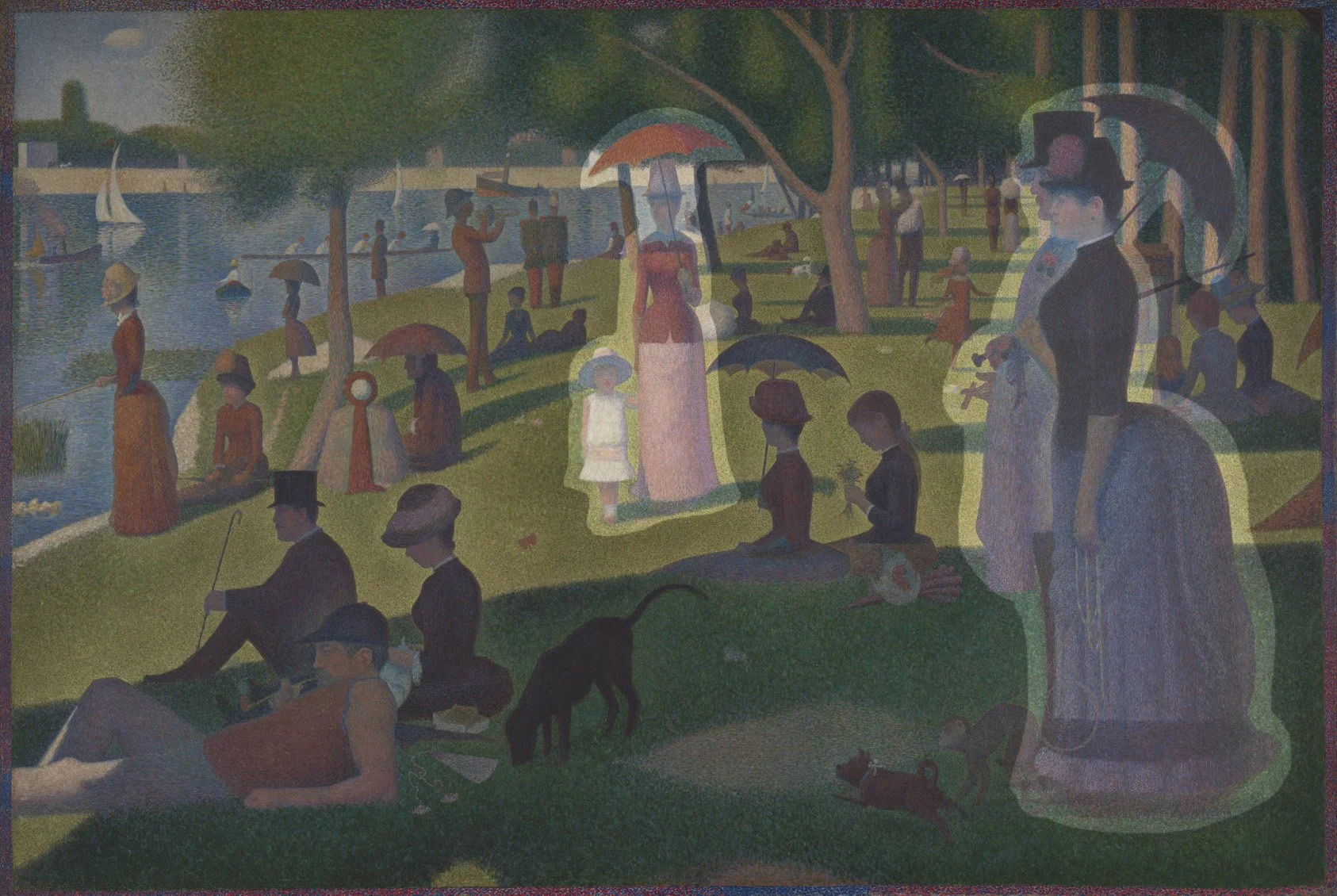
The principles of design describe the ways that an artist uses the elements of art in a work of art. The 6 principles of design are balance, emphasis, movement, pattern, proportion, and unity.
Balance: The distribution of objects, colors, texture, and space. There are three types of balance: asymmetrical, symmetrical, and radial.
Emphasis: Emphasis is the part of the design that catches the viewer’s attention. Emphasis is created by contrasting an element with other elements. Contrast is the juxtaposition of visually dissimilar elements in order to convey the fact that these elements are different.
Movement: Movement is the path the viewer’s eye takes through the work of art or design. Movement can guide the viewer to focal areas or create the look or feeling of action.
Pattern: Pattern is the repeating of an element all over the work of art. Repetition works with pattern to make the work of art seem active.
Proportion: Proportion is the relative size and scale of the various elements within a design.
Unity: Unity is the feeling of harmony between all parts of the design which creates a sense of completeness.
Let’s explore using Seurat.
References
Foote, M.C. (2024). Design Fundamentals: Elements & Principles. University of California Berkeley Library. https://guides.lib.berkeley.edu/design.
Genius. (n.d.). Sunday. https://genius.com/Mandy-patinkin-and-sunday-in-the-park-with-george-ensemble-sunday-lyrics.
Henderson, C. (2012). Sunday - from Sunday in the Park With George [Video]. YouTube. https://youtu.be/YsHflVxyGKQ?si=X2kMkJ-EWF-x083Q&t=61
Seurat, G. (1884). A Sunday on La Grande Jatte — 1884 [Painting]. The Art Institute of Chicago, Illinois, United States. https://www.artic.edu/artworks/27992/a-sunday-on-la-grande-jatte-1884/.
Sondheim, S. (1984). “Sunday” [Song]. In Sunday in the Park with George (Original Broadway Cast Recording). Masterworks Broadway.